I’ve written elsewhere about the communication I had with the AMI training centre in Chennai after I registered for the 3-6 training, but it bears repeating: I explained that I’d read all of Montessori’s books and wondered if the trainers could recommend some books on pedagogy or child development, ones they had found interesting or thought-provoking, by authors other than Montessori. Their answer: “Read Montessori’s books again.”
According to Wikipedia, “The earliest known formal school was developed in Egypt's Middle Kingdom under the direction of Kheti, treasurer to Mentuhotep II in 2061-2010 BC.” So formal education has a history that dates back more than 5000 years and in that time there have been innumerable ground-breaking philosophers, theorists and thinkers who have considered, researched, studied and written about the theory and practice of education. If, like me, you believe that Maria Montessori didn’t have a monopoly on child development and that some of those pedagogues might have had the odd worthwhile thought from time to time, then this section of the site is aimed at you. It will be expanded over time, but so far I have written about the following educators.
J.A. Comenius (1592 - 1670)
John Locke (1632 - 1704)
J.J. Rousseau (1712 - 1778)
Johann Pestalozzi (1746 - 1827)
Friedrich Froëbel (1782 - 1852)
Jean Marc Itard (1774 - 1838)
Édouard Séguin (1812 - 1880)
John Dewey (1859 - 1952)
Rudolf Steiner (1861 - 1925)
Lev Vygotsky (1896 - 1934)
Jean Piaget (1896 - 1980)
A.S. Neill (1883 - 1973)
Célestin Freinet (1896 - 1966)
Caleb Gattegno (1911 - 1988)
Jerome Bruner (1915 - 2016)
Haim G. Ginott (1922 - 1973)
John Holt (1923 - 1985)
Resources
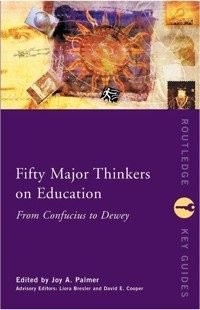
Joy A. Palmer
Fifty Major Thinkers on Education, from Confucius to Dewey
Back in the early 2000’s, when I was first researching education, this book was extremely helpful.
Donald Clark
2500 years of learning theory from Greeks to Geeks
‘Donald Clark has distilled his knowledge of education theory into a highly readable series of short articles about 280 key educational thinkers, ranging from ancient philosophers to modern-day pedagogists and innovators, outlining their main contributions to education and assesses their legacy. It’s a hugely valuable resource and a great way for history of education newbies to dip their toes into two-and-a-half thousand years of human thought about how we learn.’
Donald Clark on 2500 years of learning theory - from the Greeks to the Geeks
S2E6 of the podcast Rethinking Education is an interview with Donald Clark.
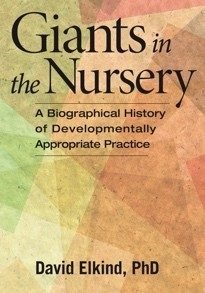
David Elkind
David Elkind, Ph.D. is currently Professor Emeritus of Child Development at Tufts University and has over 500 publications, including …
Giants in the Nursery: A Biographical History of Developmentally Appropriate Practice. (2015). ‘Biographical sketches and perspectives of eleven philosophical, pedagogical, and theoretical figures -the giants- whose contributions mark turning points in early childhood education.’
The History of Early Childhood Education
A brief introductory article. which appears as Chapter 1 in The Wisdom of Play, a brochure produced by Community Playthings. PDF
Peter Gray
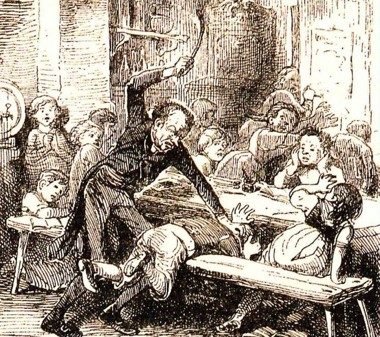
A Brief History of Education
Post # 81 on Peter Gray’s Substack, Play Makes Us Human, explores how childhood education evolved from a natural, self-directed process into the compulsory, hyper-standardized, and restrictive schooling system we see today. Gray argues that modern schools are not the result of scientific insight or logical necessity, but are instead artifacts of human history, and concludes that while society’s attitude toward children has become more humane over time, the fundamental structure of school has remained unchanged and continues to treat education as a process of forced indoctrination and behavioral molding, which actively stifles the natural, play-based learning instincts humans evolved to use. The image is sourced from Peter Gray's substack, https://petergray.substack.com/p/81-a-brief-history-of-education.
Performance Magazine
‘Profiles of some of the most well-known educators from antiquity to date, originally published by the United Nations Educational, Scientific and Cultural Organisation (UNESCO) in ‘Prospects: Quarterly Review of Comparative Education’, and are reproduced with permission from the International Bureau of Education. Written by scholars, the profiles outline the life, ideas and ideals of over 100 famous educators including philosophers, statesmen, politicians, journalists, psychologists, poets, men of religion, from around of the world.’
Wikipedia
Paul Main
Child Development Theories: 10 Frameworks for Teachers
Ten child development theories every teacher needs (Piaget, Vygotsky, Erikson, Bowlby, Bandura, and more) and how each theory shapes age-appropriate teaching strategies.
Lillio
Early Childhood Education: Then and Now
‘Delves into the history of early childhood education and how it has evolved. He also explores what is still implemented today and how children learn through different curriculums and methods of teaching around the world.’
Professor Steven Bonnay teaches at Seneca College, Canada.
The Pestalozzi Foundation
Background to Education in Europe in Pestalozzi’s Time PDF
Harley Richardson
Learning Through the Ages
‘A history of Education blog. I’m a parent, I’ve worked in education publishing for over 20 years, and I’m also a history of education autodidact and I discovered that education had a fascinating and rich history stretching back over 2,000 years, and I was hooked. I hunted down more books on the topic to fill the gaps in my knowledge. Eventually I convinced my bosses to let me do a lunchtime talk for colleagues about what I’d learned. Most of the audience were teachers and it turned out that this was a new story for them too. Shockingly to me, they’d been taught little or nothing about the history of education during their training. When I went on to give further talks for other audiences, I discovered this was a common experience.’
The Montessorian
Theories of Developmental Stages
A brief overview of the work of Erik Erikson, Jean Piaget, and Rudolf Steiner.
The International Academy of Education (IAE)
Educational Practices Booklets
IAE created this series to “assist practitioners to improve practice through the provision of short publications which present the results of well-established bodies of research in easy-to-read booklets, published and distributed through a cooperative arrangement with the International Bureau of Education (IBE) in Switzerland.”
- Responsive Teaching: Principles for Instructional Agility by Carl Hendrick (upcoming)
- NEW: Curriculum Alignment by Lorin W Anderson
- Promoting gender equity in and through education by Alejandra Mizala
- Curriculum Matters: What Teachers Should Know and Do by William Schubert
- Education and Covid-19: Recovering from the shock created by the pandemic and building back better by Fernando M. Reimers
- Teaching Students How to Learn: Setting the stage for lifelong learning by Stella Vosniadou
- Philosophy for children by Keith J. Topping, Steve Trickey, and Paul Cleghorn
- Math Anxiety by Denes Szűcs and Irene C. Mammarella
- Proportional reasoning by Van Dooren, W., Vamvakoussi, X. & Verschaffel, L.
- Accountable Talk: Instructional dialogue that builds the mind by Resnick, L., Asterhan, C. & Clarke, S.
- Guiding Principles for Learning in the Twenty-first Century by Hughes, C & Acedo, C
- Task, Teaching and Learning: Improving the quality of education for economically disadvantaged students by Anderson, L & Pešikan, A
- Understanding and facilitating the development of intellect by Demetriou, A & Christou, C
- Nurturing creative thinking by Kampylis, P & Berki, E
- Emotions and Learning by Pekrun, R
- Effective Pedagogy in Social Sciences by Sinnema, C. and Aitken, G.
- Teaching Fractions by Fazio, L. & Siegler, R.
- Principles of Instruction by Rosenshine, B.
- Teaching Other Languages by Bernhardt, E.
- Effective Pedagogy in Mathematics by Anthony, G., & Walshaw, M.
- Teacher Professional Learning and Development by Timperley, H.
- Teaching Science by Staver, J.R.
- Creating a Safe and Welcoming School by Mayer, D.E.
- Using New Media by Chung-wai Shih, C., & Weekly, D.E.
- Teaching Speaking, Listening and Writing by Wallace, T., Stariba, W.E., & Walberg, H.J.
- Promoting Pre-School Language by Lybolt, J., & Gottfred, C
- Teaching Reading by Pang, S., & Muaka, A., & Bernhardt, E., & Kamil, M.
- Academic and Social Emotional Learning by Elias, M.
- Motivation to Learn by Boekaerts, M.
- Preventing HIV/AIDS in Schools by Schenker, I.
- Preventing Behaviour Problems: What Works by Foster, S.L., Brennan, P., Biglan, A., Wang, L., & al-Ghaith, S.
- How Children Learn by Vosniadou, S.
- Teaching Additional Languages by Judd, E.L., Tan, L., & Walberg, H.J.
- Tutoring by Topping, K.
- Improving Student Achievement in Mathematics by Grouws, D.A., & Cebulla, K.J.
- Effective Educational Practices by Walberg, H.J., & Paik, S.J.
- Parents and Learning by Redding, S.
- Teaching by Brophy, J.
Recommended Reading
The Development of Education in the Twentieth Century, by Adolph E Meyer, 1900. PDF
Pioneers of Early Childhood Education: A Bio-Bibliographical Guide, by Barbara Ruth Peltzman. 1998.
This reference book provides biographies and extensive primary and secondary source bibliographies for over 30 pioneers, including Comenius, Locke, Rousseau, Pestalozzi, Froebel, and Montessori.
Early Childhood Education: History, Philosophy and Experience, by Cathy Nutbrown. 1996.
Explores the historical roots, philosophical foundations, and lived experiences shaping early childhood education, blending theory and practice to inform teaching and curriculum development.
An Introduction to Early Childhood Studies, by Tim Maynard and Nigel Thomas. 2004.
Designed primarily for undergraduate students on Early Childhood Studies and related education or care degrees, giving a broad, critical overview of the field.
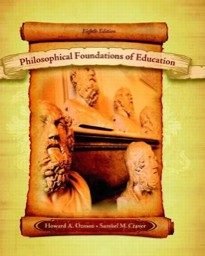
Philosophical Foundations of Education, by Howard A. Ozmon and Samuel M. Craver. 1976.
Explores how major philosophical traditions shape educational theory and practice. Widely used in teacher education, it examines perennial questions about knowledge, values, and human development through the lens of education. Review/Summary
Theories of Childhood - An Introduction to Dewey, Montessori, Erikson, Piaget and Vygotsky, by Carol Garhart Mooney, 2000.
‘This best-selling resource provides clear, straightforward introductions to the foundational theories of John Dewey, Maria Montessori, Erik Erikson, Jean Piaget, and Lev Vygotsky. Each chapter highlights a theorist's work and includes insight on how the theory impacts teaching young children today. Discussion questions and suggested readings are included to help you gain an understanding of what it means to apply each theory to your work with children.’